
Cafe Packaging in Malaysia: The Complete Guide to Carrier Bags That Carry Your Brand Home (2026)

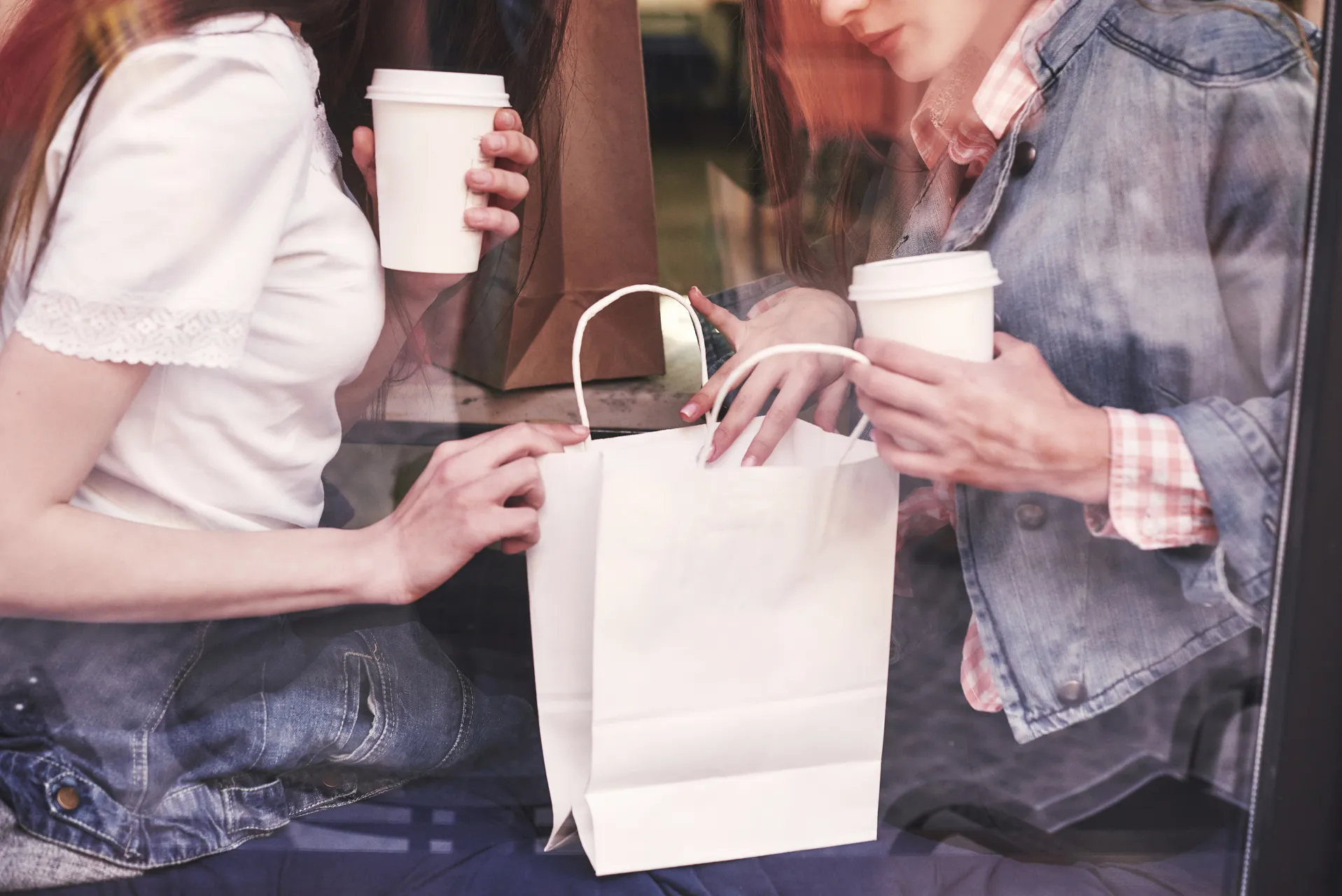
It is a Saturday afternoon. Two GrabFood riders are waiting at your counter. Your staff is trying to fit a bento box, an iced latte, and a slice of burnt cheesecake into a paper bag that is already darkening with condensation. The bag tears. The rider sighs.
That bag just became the last thing the customer remembers about your cafe.
The real problem is not the bag itself. The problem is that nobody explained which bag fits what. You bought paper bags because they looked clean in the catalogue, but nobody warned you that paper fails when iced drinks sweat against the wall.
Meanwhile, you are managing five WhatsApp chats with five different vendors for cups, boxes, lids, bags, and cutlery. None of them explains how their product relates to the others. You are assembling the packaging system by trial and error, one torn bag at a time.
You did not open a cafe to become an expert in paper bag GSM weights. You opened a cafe to make great food. The packaging should be the easiest part.
This guide maps each carrier bag type to real cafe orders so you can order with confidence instead of guessing. It covers the full cafe packaging picture, then zeroes in on the one layer that matters most: the bag your customer walks home with.
TL;DR: Key Takeaways
- Cafe packaging is a system, not a product list. Four layers work together: Contain, Secure, Carry, Brand. The carrier bag (Layer 3) is the only piece the customer keeps and reuses.
- Match the bag to what goes inside it. Iced drinks and delivery orders need non-woven or cooler bags. Dry pastry pickups suit paper bags. Premium specialty cafes benefit from kraft paper.
- MOQs are lower than expected. Paper Bag starts at 50 pieces for smaller sizes. Non-Woven Tote and Cooler Bag sit at 100 pieces flat. Canvas Bag starts at 100 to 200 pieces depending on size.
- Non-woven is not banned. Under Malaysia's Roadmap towards Zero Single-Use Plastics, non-woven polypropylene is classified as a reusable alternative, not single-use plastic.
What "Cafe Packaging" Actually Means: The Four-Layer System
Cafe packaging is not a list of products. It is a four-layer system, and most cafe owners only think about the first two layers.
The four layers:
- Layer 1: Contain. Cups, boxes, bowls, bento containers. What the food or drink goes into.
- Layer 2: Secure. Lids, sleeves, cup holders, sealing tape. What keeps it in place during transit.
- Layer 3: Carry. Paper bags, non-woven totes, kraft paper bags, cooler bags, canvas bags. What the customer carries home.
- Layer 4: Brand. Printed logos, colours, and identity across all layers. What represents the cafe after the customer leaves.
Layers 1 and 2 go in the bin within 30 minutes of the customer getting home. Layer 3, the carrier bag, is the only piece the customer keeps. A non-woven tote at 90 GSM is reused 50 or more times before it wears out. That is 50 or more brand impressions per unit, for the cost of a single bag.
The bag is not a packaging accessory. It is the highest-ROI marketing asset in the entire cafe packaging stack.
This guide focuses on Layer 3 because that is what Viazan Print specialises in, and it is also the layer most cafe owners get wrong. For containers and lids (Layers 1 and 2), work with a food packaging supplier such as Benxon, Foodabox, or LOKYO.
Five bag types serve the cafe market in Malaysia: non-woven polypropylene (90 GSM), paper bag (175 to 190 gsm), kraft paper bag (natural brown), cooler bag (non-woven + 2mm metalized foam), and cotton canvas (8 to 12 oz). rPET (recycled PET) is also available as an eco-premium option.
Who This Guide Is For (and What We Don't Make)
This guide is for independent cafe and kopitiam owners in Malaysia who order carrier bags in quantities of 50 to 5,000 pieces. If you run one to three outlets and want your takeaway bag to look as intentional as your menu, keep reading.
It is also relevant for F&B startups planning a launch and multi-outlet brand managers planning seasonal packaging refreshes for Hari Raya or Chinese New Year.
This guide is not for: home bakers wanting 20 pieces, dropshippers without physical operations, or chains needing a single invoice covering cups, boxes, and bags.
Viazan Print manufactures carrier bags: non-woven, paper, kraft paper, cooler, canvas, and rPET. We do not make cups, boxes, bowls, lids, or cutlery. For the full cafe packaging setup, pair with a container specialist. This article covers Layer 3 of the four-layer system: the bag your customer walks home with.
Five Bags for Five Cafe Scenarios
The right cafe carrier bag depends on what goes inside it, not on what looks best in the catalogue. Here are five real cafe scenarios and the bag that wins each one.
1. The Bento Box + Bubble Tea Delivery: Non-Woven Tote (90 GSM)
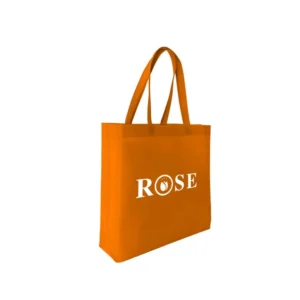
Two GrabFood riders are waiting. Each order has a bento container, a sealed iced drink, and sometimes a small dessert. The bag needs to hold 5 to 8 kg without tearing, resist condensation from the iced drink, and survive a scooter ride across Petaling Jaya.
Non-woven polypropylene wins this scenario. Viazan's standard is 90 GSM, which handles 8 kg and above. The water-resistant surface means iced drink condensation does not soak through the way it does with paper.
MOQ: 100 pieces flat for standard sizes. Custom shapes are not offered in non-woven.
This is the cafe "walking billboard" bag. Every delivery that goes out in a branded non-woven tote earns 50 or more additional brand impressions over the bag's lifetime, because the customer tosses it in their car, uses it as a grocery tote, and sees the cafe logo every time.
2. The Pastry Pickup and SOS Bag Run: Paper Bag (175 to 190 gsm)
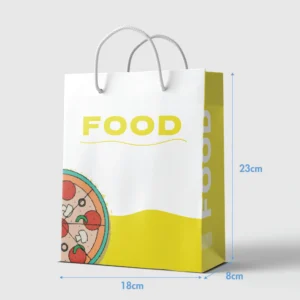
A customer walks in, orders a croissant and a flat white for dine-in, then asks to take a second pastry home. Or it is a lunch-hour queue, and every customer grabs a packed sandwich in an SOS (self-opening sack) style paper bag and walks straight back to the office.
Paper bags deliver a clean, professional look for inside-store pickup and dry baked goods. Viazan offers 7 standard sizes from H23 x W18 x D8 cm to H42 x W32 x D12 cm, all at 175 to 190 gsm. Sturdy enough for anything dry.
MOQ: 50 to 300 pieces depending on size. The 50-piece floor on smaller sizes is genuinely rare in the Malaysian market. Custom-shape paper bags are available at 1,000 pieces.
If you are narrowing down between two paper bag sizes, Viazan's paper bag size guide Malaysia maps all seven options to common cafe and retail scenarios.
When paper bags fail (three real scenarios to watch for):
Paper bags are not suitable for every cafe scenario. Be aware of these failure modes before you commit to a full paper-only order:
- Iced drink condensation. A 16oz iced latte in a sealed cup still sweats in Malaysian humidity. The moisture soaks through a paper bag wall in under 10 minutes, the base softens, and the customer's drink lands on the floor.
- Hot food weight in rain. A 750ml nasi lemak container plus a hot drink, carried to the car park in a downpour. Paper handles soften and pull through.
- Multi-item delivery orders. Two bento boxes plus two drinks in a single paper bag is a recipe for a torn bottom.
For any scenario involving iced drinks, heavy food, or outdoor delivery, route to non-woven or cooler bags instead. Flagging this honestly saves you money and saves your customers a bad experience.
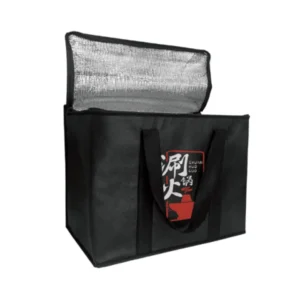
3. The Iced Drinks and Frozen Dessert Delivery: Cooler Bag (Non-Woven + 2mm Metalized Foam)
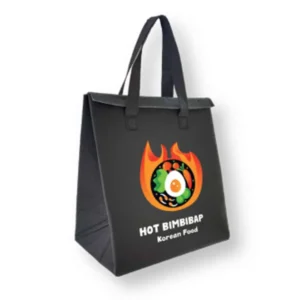
A cafe that runs a weekend ice cream delivery special, or a kopitiam that sends out iced teh tarik and cendol for office lunch orders. Temperature matters.
The bag needs insulation, a secure closure, and ideally a shoulder strap so the delivery rider's hands stay free.
Cooler bags combine a non-woven exterior with a 2mm metalized foam interior that holds temperature for both hot and cold items.
Viazan offers five standard SKUs (Cooler 02 to 06) with dimensions, handle types, and closures mapped to specific cafe use cases.
Print options include Silk Screen, Sublimation, and DTF. MOQ: 100 pieces flat. Custom shapes are not offered.
The 100 cm shoulder-strap variants (Cooler 04 and Cooler 05) are particularly relevant for cafes using Grab, Foodpanda, or in-house delivery riders, because they free up the rider's hands.
Cooler Bag Quick-Reference Table:
SKU | Size (W x H x D) | Handle | Closure | Best Cafe Use |
Cooler 02 | 35 x 30 x 12 cm | 44 cm hand-carry | Zip | Stacked flat bento containers, lunch boxes |
Cooler 03 | 28 x 36 x 18 cm | 44 cm hand-carry | Zip / Velcro | Tall items (drink bottles, upright containers) |
Cooler 04 | 35 x 30 x 20 cm | 100 cm shoulder strap | Zip | Delivery rider load, multi-meal orders |
Cooler 05 | 30 x 25 x 20 cm | 100 cm shoulder strap | Zip | Ice cream and dessert delivery |
Cooler 06 | 35 x 30 x 12 cm | 44 cm hand-carry | Velcro | Same footprint as Cooler 02, lighter-use loads |
4. The Premium Specialty Cafe Pickup: Kraft Paper Bag
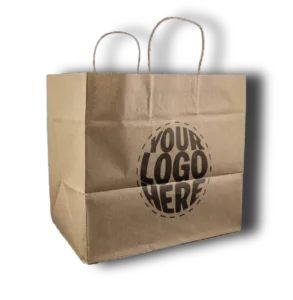
A specialty coffee brand in Bangsar that charges RM22 for a pour-over and RM16 for a matcha croissant. The customer is buying an experience, not just food.
The bag they carry out must look as intentional as the latte art. Natural brown kraft paper with a clean one-colour logo says "artisan" immediately.
Kraft paper bags offer a natural brown finish that gives off a premium feel without looking overly polished. This type of bag comes in four series: Cake Series, Food Series, SOS Series, and Wine Series.
MOQ for standard sizes: contact Viazan for inquiry. Custom-shape kraft paper bags are available at 2,000 pieces.
Kraft paper is a particularly strong choice for multi-outlet operators running Hari Raya or Chinese New Year seasonal packaging refreshes, where the natural-brown aesthetic pairs well with festive branding.
5. The Brand-Statement Checkout Bag: Canvas Bag (8 to 12 oz Cotton)
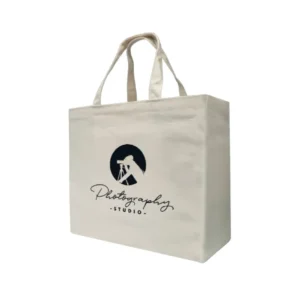
The cafe sells branded tote bags at checkout for RM15 to RM25 as a merch item. Customers carry their brunch home in it, then use it as a grocery tote for months. This is not packaging. It is a product.
Canvas bags are made from 8 to 12 oz cotton, heavy, structured, and premium to the touch. They work best as a lower-volume strategic SKU, not a high-rotation operational bag.
MOQ: 100 to 200 pieces depending on size. Custom shapes: 300 pieces.
Canvas works as a brand-statement bag, but non-woven costs less per unit and handles heavier loads. This non-woven vs canvas bag comparison helps you decide which role each one plays in your cafe.
rPET: The Eco-Premium Option
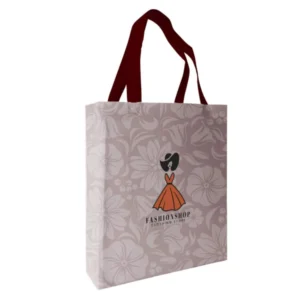
rPET (recycled PET) is the eco-premium option for cafes that want their packaging to match a sustainability-first brand story.
rPET bags are made from recycled plastic bottles, processed into a durable fabric that looks and feels similar to standard non-woven but carries a stronger environmental credential.
For cafes already promoting reusable straws, compostable cutlery, or zero-waste menus, an rPET carrier bag closes the loop on the packaging side. Customers who care about where their bag comes from will notice.
MOQ: 300 pieces. Custom shapes are not offered. Print options follow the same range as standard non-woven (silkscreen, sublimation, DTF).
Use-Case Material Comparison Table
Real Cafe Scenario | Best Bag | Key Spec | Standard MOQ | Custom MOQ | Reusability |
Bento + iced drink delivery (GrabFood, rider) | Non-Woven Tote | 90 GSM, water-resistant | 100 pcs flat | Not offered | 50+ uses |
Pastry pickup, SOS bag, dry baked goods | Paper Bag | 175-190 gsm, 7 sizes | 50-300 pcs (by size) | 1,000 pcs | Single use |
Iced drinks, frozen desserts, temperature-sensitive | Cooler Bag | Non-Woven + 2mm Foam, 5 SKUs | 100 pcs flat | Not offered | 50+ uses |
Premium specialty cafe pickup | Kraft Paper Bag | 175-190 gsm, natural brown, 7 sizes | Contact for inquiry | 2,000 pcs | Single use |
Branded merch / checkout tote (sold item) | Canvas Bag | 8-12 oz cotton | 100-200 pcs (by size) | 300 pcs | 100+ uses |
One constraint to note: custom-shape bags are only available in three materials: Canvas (300 pcs), Paper Bag (1,000 pcs), and Kraft Paper Bag (2,000 pcs). Cafes wanting bespoke shapes in Non-Woven, Cooler, or rPET must choose from standard sizes. This is a real production constraint, not a fine-print surprise.
Pricing note: pricing depends on material, size, print method, and volume. The most accurate way to budget is to message Viazan with your bag type and target quantity for a quotation.
Match Your Bag to Your Menu: The Sizing Reference Table
The most common preventable mistake when ordering cafe carrier bags is choosing by aesthetics or unit price alone, then discovering at peak hour that a 2-cup holder plus a takeaway container does not fit.
The right bag is engineered around what goes inside it.
Most cafe owners order their first batch of bags based on how the food fits. The drink carrier gets forgotten.
A paper bag that holds a bento box perfectly becomes useless the moment a 2-cup holder goes on top, because the bag is 5 cm too narrow. The fix is simple: size the bag around your full standard order, not around a single item.
Bag-to-Cafe-Order Sizing Reference Table
Common Cafe Order | What Goes Inside | Recommended Bag | Viazan Size Reference | Material |
Single coffee + pastry | 1 x 12oz cup + 1 pastry box | Paper Bag 1 or 2 | H23 x W18 x D8 cm | Paper 175-190 gsm |
Two-drink carrier + takeaway box | 1 x 2-cup holder + 1 x 750ml-1000ml container | Paper Bag 3 or 5 | H23-35 x W18-32 x D8-12 cm | Paper 175-190 gsm |
Full delivery order (bento + iced drink + dessert) | 1 x bento + 1 x sealed iced drink + 1 small box | Non-Woven Tote (standard) | W 28 cm X H 33 cm x D 8 cm | Non-Woven 90 GSM |
Weekend brunch family order | 2-3 containers + 2 drinks + cutlery pack | Non-Woven Tote (large) or Cooler 04 | Cooler 04: 35 x 30 x 20 cm | Non-Woven or Cooler |
Ice cream / frozen dessert delivery | 2-4 frozen items, temperature-sensitive | Cooler 05 | 30 x 25 x 20 cm | Cooler (metalized foam) |
Premium single-item pickup (pour-over + pastry) | 1 x premium drink + 1 pastry | Kraft Paper Bag (small) | H23 x W18 x D8 cm | Kraft 175-190 gsm |
If your cafe order lands between two paper bag sizes in this table, Viazan’s paper bag size guide Malaysia has the exact measurements for all seven options so you can confirm the fit before ordering.
The "Walking Billboard" Maths (and What KPKT Allows in 2026)
A branded non-woven tote bag is not a packaging cost. It is a 12-month marketing campaign that costs less than a cup of kopi per day.
Walking Billboard Maths
RM2.00 branded non-woven tote (directional estimate, not a quoted price) ÷ 50 reuses (industry-average lifespan of a 90 GSM non-woven bag) = RM0.04 per brand impression
Compare that to outdoor billboard CPM rates or Meta ad CPM in Malaysia. The non-woven tote beats both by a wide margin per impression, and the customer does the distribution work for you. Every time that bag goes to the grocery store, your cafe logo goes with it.
That branded bag is not a RM2 cost. It is a 12-month outdoor campaign.
The RM0.04-per-impression figure assumes a branded non-woven tote at around RM2.00 per unit. Your actual cost depends on material, size, and print method. Viazan's custom bag pricing in Malaysia guide explains what moves that number up or down.
KPKT Compliance: Non-Woven Is Not Banned
Under Malaysia's Roadmap towards Zero Single-Use Plastics 2018-2030, non-woven polypropylene bags are classified as a reusable alternative, not single-use plastic.
A 90 GSM non-woven tote engineered for 50 or more reuses sits squarely within the reusable category the regulation encourages. State-level "No Plastic Bag" policies in Penang, Selangor, Johor, and the Federal Territory target single-use plastics, not reusable carriers.
For cafes that want to lead on sustainability credentials beyond standard non-woven, rPET bags offer an eco-premium upgrade path.
Before You Order: The Cafe Owner's Verification Checklist
Before you send that WhatsApp message, run through this checklist. It takes two minutes and prevents the three most common first-order mistakes.
- Confirm the bag material and GSM/oz match your use case. Refer back to the five cafe scenarios above. Iced drinks and delivery orders need non-woven or cooler bags, not paper.
- Confirm the MOQ for your chosen size. Standard sizes have lower MOQs than custom shapes. Paper bags start as low as 50 pieces.
- Test your bag dimensions with your actual containers and cups. Use the sizing table above, then physically check by placing your standard order combination inside. Do not rely on catalogue images alone.
- Confirm lead time against your launch or restock date. Get the production timeline in writing before you approve artwork. Viazan's Petaling Jaya factory ships in 5 working days for orders under 10,000 pieces and 8 working days for orders between 10,000 and 20,000 pieces. China-sourced suppliers commonly quote 3 to 5 weeks plus another 2 months for fully custom designs.
- Confirm artwork file format. Vector files (AI, EPS, SVG) are preferred. Ask your supplier upfront what happens if you only have a high-resolution JPEG.
- Confirm print method (silkscreen, sublimation, DTF, heat transfer, or lamination) and that it supports your logo's colour count and complexity.
- Confirm whether a pre-production sample is included, paid, or available on request.
- Confirm courier partner and delivery window. Ask about Klang Valley delivery specifically.
- Confirm payment terms and deposit structure before artwork approval.
- Confirm whether the supplier produces locally or sources from overseas. Local production (Petaling Jaya) means 5 working days for standard orders. China-sourced suppliers commonly quote 3 to 5 weeks plus another 2 months for fully custom designs.
Warning signs to watch for:
- Suppliers who refuse to confirm where bags are produced.
- Suppliers who add "block charges" or setup fees only at invoice stage, not at quote.
- Suppliers who quote 4 or more weeks without explaining why.
- Suppliers who cannot show a real client portfolio with branded cafe bags.
This checklist covers the essentials. Viazan's questions to ask your packaging supplier goes deeper if you are vetting multiple suppliers side by side and want a full scoring framework.
Why Viazan Print
Viazan Print is a carrier bag manufacturer based in Petaling Jaya, Selangor, equipped with advanced printing technology and a dedicated production facility capable of delivering standard orders within 5 working days.
- Local production. All bags are manufactured in Malaysia. No waiting 3 to 5 weeks for overseas shipments.
- Six bag materials under one roof. Non-woven, paper, kraft paper, cooler, canvas, and rPET. Combine multiple materials on a single order.
- Low MOQs for standard sizes. Paper Bag from 100 pieces. Non-Woven Tote and Cooler Bag at 100 pieces flat.
- Multiple print methods. Silkscreen, sublimation, DTF, heat transfer, and lamination. The right method for your logo's complexity and colour count.
- Mock-up before production. Every order includes a mockup sample for approval before bulk printing begins.
- WhatsApp-first communication. Message us at +60 10-387 2683 and get a response within a few hours.
Bottom Line
Cafe packaging in Malaysia is a four-layer system: Contain, Secure, Carry, Brand. The carrier bag (Layer 3) is the only layer the customer keeps.
Choosing it well means engineering around what goes inside your standard cafe order, not around what looks good in a catalogue.
Match the bag material to your most common cafe scenario. Match the size to what actually goes inside. Match the MOQ to your outlet count and reorder cadence.
The sizing reference table in this guide is something no other supplier publishes. Use it. Adapt it to your menu. Screenshot it and forward it to your ops team.
FAQ
MOQ and Quantity
What is the minimum order quantity (MOQ) for custom cafe carrier bags in Malaysia?
Viazan Print's standard-size MOQs vary by material and size. Paper Bag: 50 to 300 pieces depending on which of the 7 sizes. Canvas Bag: 100 to 200 pieces. Non-Woven Tote: 100 pieces. Cooler Bag: 100 pieces. Kraft Paper Bag standard sizes: contact for inquiry. Custom shapes are only available in three materials: Canvas at 300 pieces, Paper Bag at 1,000 pieces, and Kraft Paper Bag at 2,000 pieces. Custom shapes are not offered in Non-Woven, Cooler, or rPET.
Can I combine multiple bag types on a single purchase order?
Yes. Viazan produces paper, kraft paper, canvas, non-woven, cooler, and rPET bags in-house in Petaling Jaya. You can combine multiple materials on one order. This is useful if your cafe needs paper bags for inside-store pickup, non-woven delivery bags for GrabFood riders, and cooler bags for weekend ice cream specials.
Material and Sizing
What paper bag size fits a 12oz takeaway cup and a 750ml lunch box?
For a single 12oz hot drink plus a pastry, Paper Bag 1 or 2 (H23 cm) is enough. For a 2-cup carrier plus a 750ml to 1000ml takeaway container, step up to Paper Bag 3 or 5 (H23 to 35 cm range). See Viazan's paper bag size guide for the full breakdown by size number.
Do I need a vector logo file to order custom printed bags?
Vector files (AI, EPS, SVG) are preferred because they scale without losing sharpness. If you only have a high-resolution JPEG or PNG, most suppliers can work with it for simpler logos, but complex gradients or fine text may require conversion. Ask your supplier upfront during quoting so there are no surprises at the artwork approval stage.
Lead Time and Process
How long does it take to produce custom cafe bags in Malaysia?
Orders under 10,000 pieces ship in 5 working days from Viazan's Petaling Jaya factory once artwork is approved. Orders between 10,000 and 20,000 pieces ship in 8 working days. China-sourced suppliers commonly quote 3 to 5 weeks plus another 2 months for fully custom designs.
How much do custom cafe carrier bags cost in Malaysia?
Pricing depends on bag material, GSM or oz weight, size, print method (silkscreen, sublimation, DTF, heat transfer, or lamination), order quantity, and whether you choose a standard size or custom shape. Unit cost typically drops as volume scales. The most accurate way to budget is to share your bag type, size, target quantity, and artwork with Viazan via WhatsApp for a same-day quotation.
What print methods are available for cafe carrier bags?
Common methods include silkscreen (best for bold, flat-colour logos), sublimation (full-colour, photo-quality), DTF and heat transfer (complex gradients and fine detail on non-woven or canvas), and lamination (full-wrap coverage on paper bags). The best method depends on your logo complexity, colour count, and bag material. Viazan can advise on the best fit during the quoting conversation.