
15 Questions You Need to Ask Packaging Supplier


Before placing any bulk bag order, the goal is not to find the cheapest supplier. It is to find one that will not let you down when 20,000 bags need to arrive three days before your Raya campaign launches.
Most buyers ask about price, delivery, and samples. Those questions are necessary but not enough. The ones most buyers skip, including GSM guarantees, reprint policies, and peak-season capacity, are exactly the ones that cause expensive surprises.
This guide gives you all 15 questions, explains why each one matters, and shows you what a reliable answer looks like, so you know immediately whether you are talking to the right supplier.
Browse Viazan Print's full range of non-woven, canvas, paper, and PP bags to see what a specialist bag manufacturer looks like.
Are You Talking to a Manufacturer or a Trader?

This is the question most buyers skip, and it changes everything else.
Direct manufacturers own the facility, operate the machines, and control QC from raw materials to finished bags. Traders source from a third-party factory and resell with a margin. Both can be reliable, but a direct manufacturer means lower prices, faster problem resolution, and clearer accountability.
Ask directly: "Do you own your production facility, or do you source from a third-party factory?" A manufacturer answers immediately and clearly. A trader often hedges.
Factor | Direct Manufacturer | Trader / Broker |
Pricing | Lower (no middleman margin) | Higher (markup added) |
Lead Time Control | Full (they set the schedule) | Partial (depends on third-party factory) |
Quality Control | Direct (their team on the floor) | Indirect (relies on the factory's QC) |
Problem Resolution | Faster (one call to production) | Slower (must escalate through the factory) |
Questions About Product Capabilities and Materials
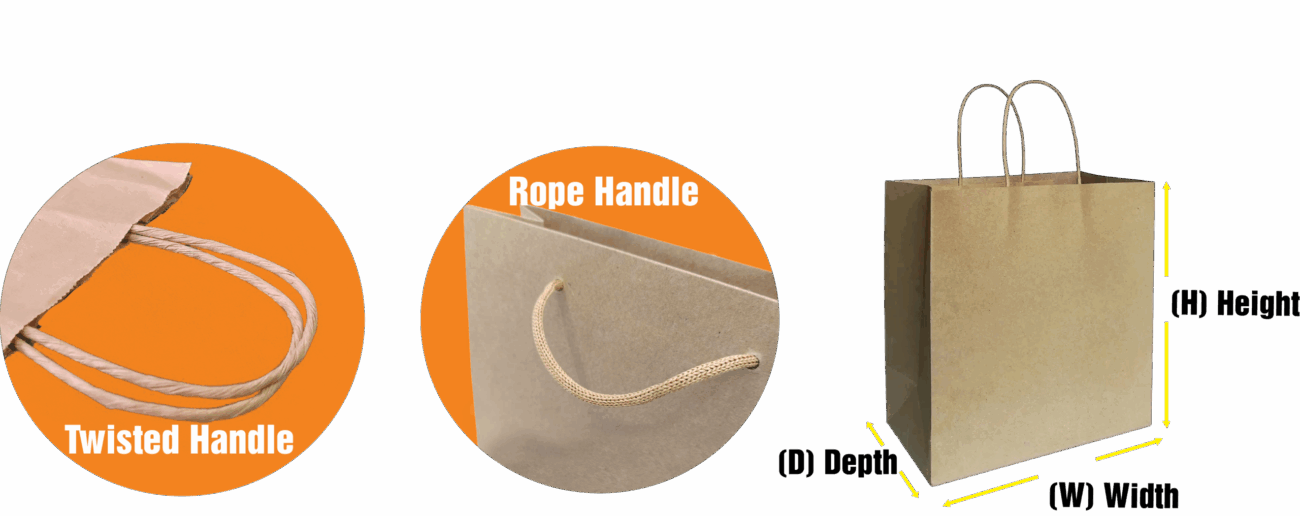
Q1: Do you specialise in bags, or is it one of many products you offer?
A supplier whose core business is corrugated boxes may technically offer bags, but its equipment and QC are calibrated for a different product. A genuine bag specialist has dedicated production lines for non-woven bags, handle attachment, and soft substrate printing.
Green flag: “Bags are our core product. We have dedicated lines for non-woven, canvas, paper, and PP bags.”
Red flag: “We do all kinds of packaging: bags, boxes, pouches, everything.”
Q2: What GSM options do you carry, and is the GSM guaranteed in writing?
GSM (grams per square meter) measures material weight and thickness. A 70 GSM bag and a 100 GSM bag can both be called “non-woven bags” in a quote. For general retail use, 80-100 GSM is standard. For premium giveaways or heavy-duty use, 100-120 GSM is appropriate. If you are still deciding on bag material, our guide on woven vs non-woven bags covers the key differences in durability, cost, and suitability for different use cases. Always get the GSM confirmed in writing on the order confirmation.
Green flag: “Yes, GSM is specified on all order confirmations.”
Red flag: “GSM is approximately X. It may vary slightly.”
Q3: Can I see production samples from a recently completed order?
A showroom sample shows the supplier’s best work under close supervision. A production sample from a recent batch of 10,000 to 50,000 units shows what standard output actually looks like. Print consistency, handle stitching, and material feel can all differ between the two.
Green flag: “Certainly, here are bags from our last three completed orders.”
Red flag: “We can make you a fresh sample to your specifications.” (Only offering a new sample, not an existing one.)
Questions About Print Quality and Artwork
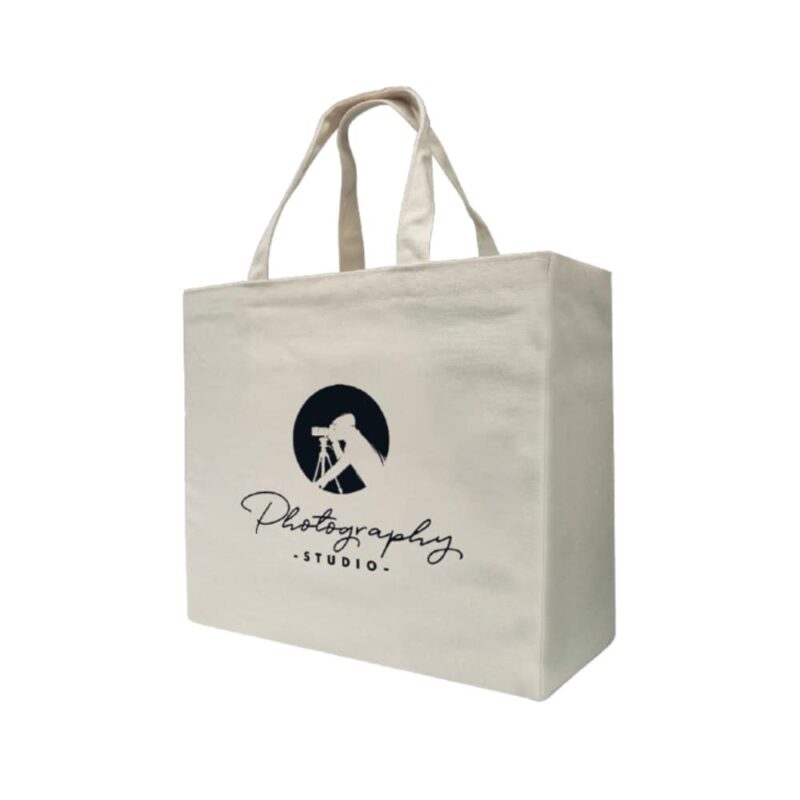
Q4: Do you offer pre-production mockups before full production begins?
Without a pre-production proof, colour and placement errors are only discovered when the full order arrives. By then, there is no time for reprints. This is especially important for laminated bags, where the print finish affects how colour renders on the final product. If you are considering laminated non-woven bags, read our guide on what laminated non-woven bags are and how they are made before finalising your spec.
Green flag: “Yes, we provide a digital proof for approval before any order goes to print.”
Red flag: “We’ll send you a proof after printing begins.”
Q5: What happens if the ink smears, cracks, or fades after delivery?
Every supplier says quality is a priority. The real test is what they do when it is not. Ask for the documented process, not a reassurance.
Green flag: “Defects reported within [X days] are eligible for reprint at no charge. We require photos and a sample of affected bags.”
Red flag: “Quality is our priority. We rarely have defects.”
Q6: Who checks the artwork file before printing, you or the client?
Some suppliers print exactly what is submitted without checking for low resolution, wrong colour mode, or misaligned bleed margins. Others flag issues before any job goes to print.
Green flag: “We review every file before printing. If we spot issues, we flag them before proceeding.”
Red flag: “We print what you send us. Artwork accuracy is the client’s responsibility.”
Question | Green Flag | Red Flag |
Pre-production proof? | Digital proof before print begins | Proof only after printing starts |
Defect reprint policy? | Documented timeline and process | “We’ll handle it case by case.” |
Artwork responsibility? | Supplier checks the file first | “We print what you send us.” |
Questions About Lead Times and Peak Season Capacity
Q7: What is your lead time for [X quantity]? Base this on a recently completed order, not your theoretical minimum.
Every supplier quotes their fastest possible lead time to win an order. Ask for a realistic figure based on a completed order of comparable quantity and complexity.
Green flag: "For 30,000 non-woven bags with CMYK print, our standard lead time is 14 to 18 working days."
Red flag: "We can do it in 7 days." (No qualification of quantity or production load.)
Q8: What is your production capacity during Raya and Chinese New Year?
Production slots at Malaysian bag manufacturers fill up 6 to 8 weeks before Raya and CNY. A supplier operating near full capacity will deprioritise, delay, or rush your order. Get the seasonal cut-off date in writing before finalising the contract.
Ordering before Raya or CNY? Ask: "When is your last confirmed-order date for delivery before [holiday]?" A supplier who cannot give a specific date may not have the capacity to guarantee your delivery.
Green flag: "Our Raya cut-off is [date]. Orders confirmed before that date are guaranteed for delivery before [date]."
Red flag: "No problem, we handle rush orders during Raya."
Q9: Can you deliver in phased batches?
Supermarket chains and pharmacy groups with multiple locations often need bags delivered in stages. Not all suppliers have the scheduling flexibility to manage this.
Green flag: "Yes, we can split delivery by location or date and confirm the schedule on the order confirmation."
Red flag: "We deliver in one shipment. You arrange distribution from there."
Question | Green Flag | Red Flag |
Lead time for our quantity? | Specific figure from a completed order | "7 days" with no qualifying conditions |
Peak season capacity? | Provides cut-off dates and recommends advance booking | "No problem, we handle rush orders." |
Phased delivery? | Confirmed schedule by location or date | "One shipment only." |
Questions About Quality Control and After-Sales

Q10: What does your QC process look like during production, not just for the sample?
A sample proves what the supplier can produce. The QC process proves what they consistently produce at scale. Ask whether they check materials on arrival, conduct in-line inspections, and do a final batch check before packing.
Green flag: "We do three-stage QC: material inspection on arrival, in-line checks, and a pre-packing final inspection. We can provide a QC report."
Red flag: "We check everything before it goes out." (Vague, with no specifics on process or frequency.)
Q11: What is your reprint policy if defects are found after delivery?
Disputes over defective orders are far easier to resolve when the policy is documented before the order is placed.
Green flag: "Defects reported within [X days] are eligible for full or partial reprint at no charge. Typical resolution time is [X] working days."
Red flag: "We'll look into it case by case."
Q12: What is your overrun and underrun policy?
It is standard practice to produce 3 to 10 per cent more or less than ordered. The key question is whether you are billed for overrun units. A buyer ordering 10,000 bags at RM2.50 each could be invoiced for 10,500 without prior notice. This should be disclosed upfront.
Green flag: "You are only billed for bags delivered. We will inform you before dispatch if the count differs significantly."
Red flag: A supplier who does not raise this until you are disputing the invoice.
Questions About Pricing, MOQ, and Commercial Terms
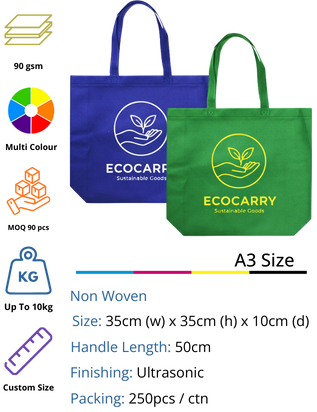
Q13: Is the quoted price fully itemised?
A quote of RM1.80 per bag may become RM2.20 once artwork setup fees, plate charges, carton packing, and delivery are added. Always request a fully itemised quote so you can compare suppliers on equal terms.
Green flag: "Here is the per-unit cost, artwork setup fee, delivery, and carton packing. No additional charges unless you request design changes."
Red flag: A quote with only a total and fine print about setup fees.
Q14: What is your MOQ, and do you offer tiered pricing at higher volumes?
Understanding volume pricing at different quantities helps with procurement planning. Consolidating two medium orders into one can generate meaningful savings.
Green flag: "Our MOQ is [X] units. Here is our pricing at 1,000, 5,000, and 10,000 units."
Red flag: "Price depends on quantity. Send your requirements and we'll quote."
Q15: What are your payment terms?
Most manufacturers require a 30 to 50 per cent deposit with the balance on delivery. For organisations with internal approval cycles, payment terms compatibility is a procurement requirement, not just a preference.
Green flag: "Standard terms are 50% deposit, 50% on delivery. For established clients, we can discuss credit terms."
Red flag: "Full payment required before production begins, no exceptions."
What Should a Complete Quote Include?
Cost Component | In Your Quote? |
Per-unit cost at your quantity | Yes |
Artwork/design setup fee | Yes (one-time charge) |
Plate/screen charges | Yes (varies by print method) |
Delivery to your premises | Yes (or "ex-factory" stated clearly) |
Carton packing and labelling | Yes |
Overrun tolerance | Yes |
GSM specification | Yes (in writing) |
Payment terms | Yes |
Your Pre-Order Supplier Checklist
Before your next supplier meeting, run through this list. A reliable supplier should answer every question clearly with specific detail, not vague reassurances. More than two red flags in any category is a strong signal to look elsewhere before committing.
Product Capabilities and Materials
- Do you specialise in bags, or is it one of many products?
- What GSM options are available, and is it guaranteed in writing?
- Can I see production samples from a recently completed order?
Print Quality and Artwork
- Do you provide pre-production mockups before printing begins?
- What is your policy if ink smears, cracks, or fades after delivery?
- Who checks the artwork file before printing?
Lead Times and Capacity
- What is your lead time for my specific order quantity?
- What is your production capacity during Raya and CNY?
- Can you deliver in phased batches?
Quality Control and After-Sales
- What does your QC process look like during production?
- What is your reprint or replacement policy for defects?
- What is your overrun/underrun policy?
Pricing and Commercial Terms
- Is the quote fully itemised?
- What are your MOQ and volume pricing tiers?
- What are your payment terms?
Why Viazan Print
Viazan Print is a direct manufacturer of non-woven bags, canvas bags, and paper bags, serving FMCG companies, supermarkets, pharmacies, and universities across Malaysia.
With over 100 skilled employees, advanced manufacturing equipment, and a quality control system built for bulk B2B orders, Viazan Print can answer every question in this checklist clearly, specifically, and immediately.
Bags are the core business. Every order comes with GSM specified in writing, pre-production artwork review, and delivery commitments based on real capacity, not best-case estimates. If you are also exploring other ways to promote your brand alongside custom bags, take a look at our roundup of trending promotional product ideas for 2025.
Contact Viazan Print today to get started.
FAQ
How do I know if a packaging supplier owns their factory or is a reseller?
Ask directly: "Do you own your production facility, or do you source from a third-party factory?" A manufacturer will answer clearly and can provide facility details or invite you to visit. A reseller will often give a vague answer. A direct manufacturer gives you greater accountability and faster resolution if something goes wrong.
What GSM should I specify for non-woven bags?
For general retail use such as supermarket carrier bags and pharmacy giveaway bags, 80 to 100 GSM is standard. For premium institutional giveaways or heavy-duty use, 100 to 120 GSM provides better durability. Always get the GSM confirmed in writing on the order confirmation.
How far in advance should I order before Raya or CNY?
For Raya, place your confirmed order at least 8 to 10 weeks before your required delivery date. For Chinese New Year, 6 to 8 weeks is typically sufficient. Always ask for the supplier's specific seasonal cut-off date. A reliable manufacturer will have one and share it clearly.
What should I do if my supplier delivers late?
Confirm a delivery guarantee and compensation policy in writing before placing the order. If a delay occurs, document it immediately via email or WhatsApp and request a revised delivery timeline. Disputes are far easier to resolve when the original lead time is confirmed in the purchase order.
What is a reasonable MOQ for custom-printed bags in Malaysia?
Most Malaysian non-woven bag manufacturers set MOQs between 500 and 2,000 units for standard designs, and 1,000 to 5,000 units for custom-printed bags. If your quantity is below a supplier's MOQ, ask whether they offer combined runs to meet minimums while reducing your per-unit cost.