
Non-Woven vs Canvas Bag: Match Material to Campaign

Key Takeaways
- This guide is written for procurement managers and marketing leads placing bulk orders of 500 units or more, not individual shoppers.
- Non-woven bags suit high-volume, cost-efficient campaigns: FMCG activations, pharmacy retail programmes, university orientation packs.
- Canvas bags suit long-term loyalty programmes and premium corporate gifts where perceived quality determines whether the bag gets reused.
- The biggest procurement mistake is choosing the cheapest material for a campaign where perceived quality drives reuse rate.
- Decision rule: If bags will be reused daily for 6+ months, choose canvas. If bags are distributed once at high volume, choose non-woven.
One Decision, Two Very Different Bags
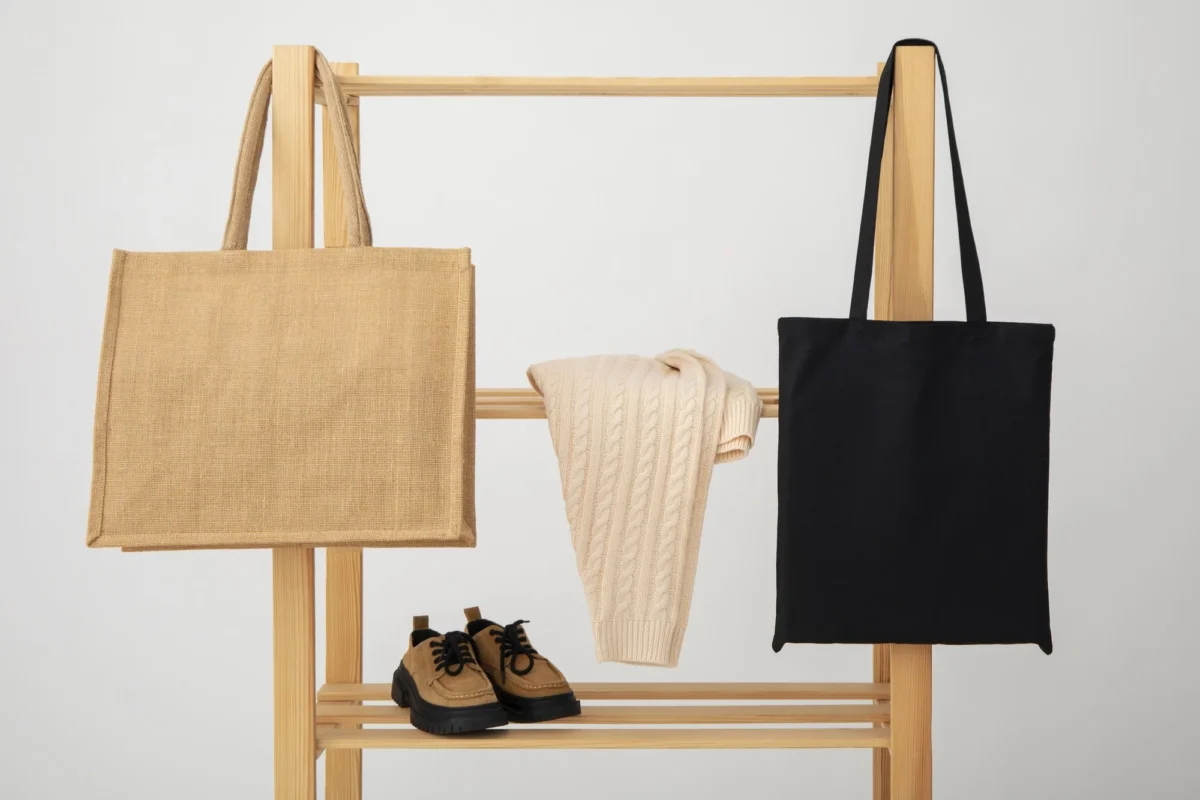
Non-woven bags and canvas bags are both popular custom bag options for Malaysian businesses, but they are built for different purposes, and ordering the wrong one for your campaign type is a common procurement mistake.
Non-woven bags suit high-volume exposure campaigns where cost per unit is the primary constraint. Canvas bags suit long-term loyalty programmes where perceived quality and repeated daily use justify the higher investment.
If you are sourcing bags for a campaign, retail programme, or corporate event, and if you are comparing materials before briefing your supplier, this guide is written for you.
Quick Comparison: Non-Woven vs Canvas at a Glance
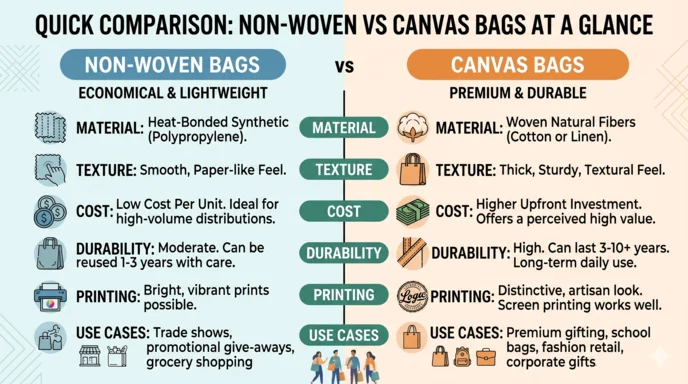
For bulk pricing, contact Viazan Print with your bag type and quantity.
What Are Non-Woven Bags? Material, GSM, and B2B Strengths
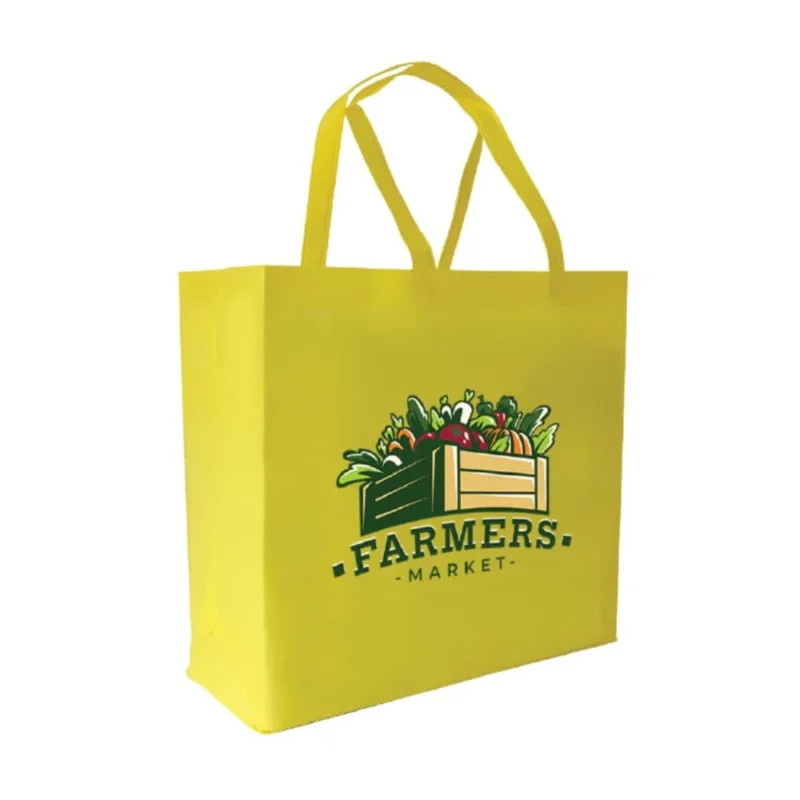
Non-woven bags are made from polypropylene (PP), a petroleum-derived plastic. The fibers are bonded using heat and pressure rather than woven, which gives non-woven bags their distinctive paper-like texture and makes them lightweight, moisture-resistant, and significantly cheaper to produce than woven alternatives in bulk.
This single fact about material composition explains everything else: why they are affordable, why they are not biodegradable, and why they perform reliably in high-volume programs.
For more on why non-woven bags have become the standard sustainable alternative to plastic for Malaysian businesses, read our dedicated guide.
GSM (grams per square meter) measures the density and weight of the non-woven fabric, and it is the specification most B2B buyers overlook when placing orders. Higher GSM means a sturdier, heavier bag with better load-bearing capacity; lower GSM means a lighter, thinner bag suited to single-use or low-handling applications.
Viazan Print’s non-woven bags are 90 GSM as standard, a weight that reliably suits moderate- to high-durability retail and promotional applications.
For a deeper dive into the laminated option, read our guide to laminated non-woven bags and when they are the right choice for bulk orders.
Non-woven bags offer three practical strengths for Malaysian B2B buyers. First, cost efficiency at high volumes: non-woven consistently delivers the lowest per-unit price among reusable bag options.
Second, fast production lead times: the heat-bonding process is simpler than weaving, which reduces production time for large orders.
Third, moisture resistance: relevant in Malaysian retail and pharmacy environments where bags come into contact with liquid products or are exposed to damp conditions.
One important limitation: non-woven bags are not biodegradable. Their eco-credentials depend entirely on how frequently the bag is reused.
A 60 GSM bag used twice is worse for the environment than a canvas bag used 100 times. Buyers sourcing bags for a brand with ESG commitments need to understand this before choosing non-woven.
What Are Canvas Bags? Material, Weight, and B2B Strengths
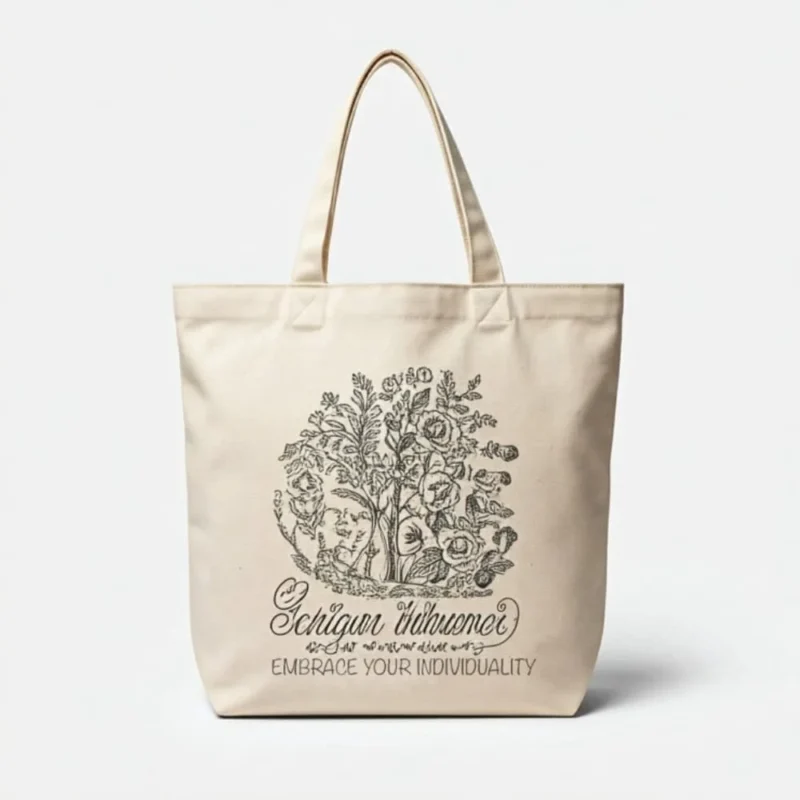
Canvas bags are made from woven natural fibres, typically cotton, producing a dense, strong fabric that holds shape under weight and withstands repeated machine washing.
This woven construction is more resource-intensive than heat-bonded non-woven production, which is why canvas bags cost more per unit. Procurement managers who understand why canvas costs more are better positioned to justify that premium internally.
Viazan Print's canvas bags are available in 8-12 oz cotton canvas, with a standard flat bag available in W35cm x H40cm. Printing options include silk screen, sublimation, and DTF, confirming canvas as a strong choice for detailed logo applications.
Canvas Weight Guide
Weight | Best For | Typical Malaysian B2B Use |
8 oz (lightweight) | Conference bags, lifestyle brand promos | Light promotional giveaways |
10–12 oz (standard) | Retail and corporate gift bags, moderate loads | Supermarket loyalty bags, corporate events, university packs |
Three practical B2B strengths of canvas for Malaysian buyers. First, perceived premium quality: canvas bags are visually and tactilely associated with quality, sustainability, and craft; recipients are more likely to keep and reuse them daily, extending brand visibility over months.
Second, washability: cotton canvas bags can be machine-washed in cold water, making them suitable for long-term retail loyalty programmes. Third, genuine biodegradability at end of life, a meaningful advantage for brands with ESG positioning or green marketing requirements.
One practical caveat for Malaysian businesses: canvas requires proper storage in a humid climate. If stored damp or in a poorly ventilated warehouse, natural cotton fibres are susceptible to mould and mildew.
For businesses storing canvas bags in non-air-conditioned stockrooms, ensure bags are fully dry before packing and stored in breathable conditions.
Head-to-Head: 6 Dimensions That Drive the Bulk Buying Decision
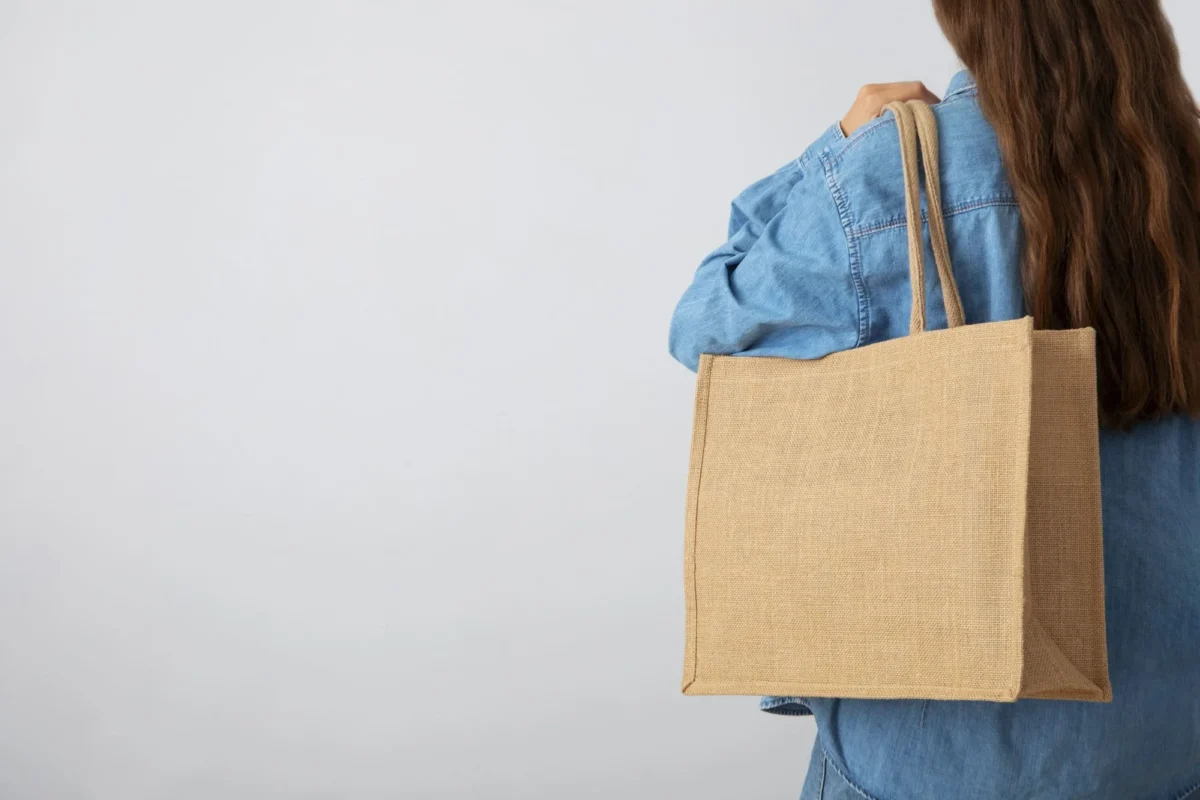
Choosing between non-woven and canvas for a bulk order is not a question of which material is generally better. It is a question of which material wins on the dimensions that matter most for your campaign.
The six dimensions below cover the full procurement brief: what you pay per unit, how long the bag lasts, what load it can carry, how your logo prints, what signal the bag sends about your brand, and where each material stands on sustainability.
Dimension | Non-Woven | Canvas | B2B Verdict |
Cost per unit | Lower per unit: contact Viazan Print for bulk pricing | Higher per unit: contact Viazan Print for bulk pricing | Non-woven wins on upfront cost; canvas may win on cost-per-use for long-term programmes |
Durability | 1–3 years moderate use | 3–10 years with washing | Canvas wins for the long term; irrelevant for single-distribution campaigns |
Weight capacity | High-GSM (100–120) suits standard retail loads | Heavy-duty canvas (14 oz+) suits laptops and heavy grocery | Canvas wins for heavy load applications |
Print quality | Vibrant full-colour via laminated printing | Soft, artisanal via screen print; premium via embroidery | Depends on logo style and brand aesthetic |
Brand positioning | High volume, high exposure | Long-term loyalty, brand prestige | The campaign goal determines the verdict |
Eco-perception | Not biodegradable; eco-efficient when reused 50+ times | Biodegradable; water-intensive to produce | Neither wins universally; the reuse rate is the deciding factor |
For bulk pricing specific to your order volume, contact Viazan Print directly.
On cost, non-woven wins on the upfront per-unit price across all volume tiers. This is not in dispute. The gap is most significant at lower volumes (500–2,000 units) and narrows as order volume increases.
At 10,000+ units with a local Malaysian manufacturer, the total cost of ownership, based on actual usage, may favour canvas for long-term programmes.
In terms of brand positioning, neither material wins universally. A non-woven bag signals accessibility and mass distribution, appropriate for FMCG activations and pharmacy retail programmes where reach is the goal.
A canvas bag signals quality and craftsmanship, appropriate for premium gifting cycles and loyalty programmes where the bag's perceived value is part of the brand message.
Myth: Canvas is always the greener choice. Reality: A cotton canvas bag needs 7,000+ litres of water to produce and 100–130 uses to offset that footprint. For high-volume campaigns, a consistently reused quality non-woven bag often has a lower net environmental impact.
For context on custom bag pricing in Malaysia, including factors that affect bulk order costs, visit our custom bag printing page.
If biodegradability at the end of life is a core requirement for your brand, jute bags offer a naturally sustainable alternative worth considering alongside canvas.
Which Bag Fits Your Campaign? The Malaysian Industry Decision Matrix
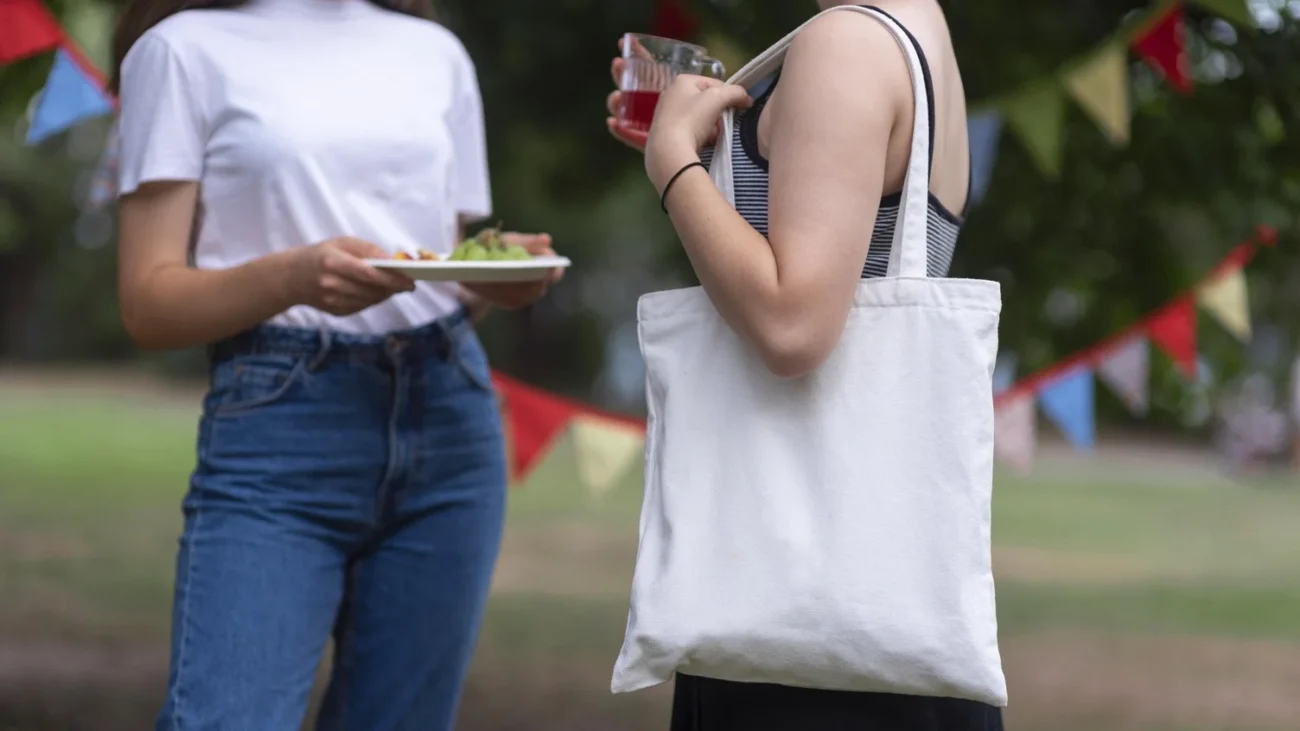
The six dimensions above reveal what each material can do. The table below translates that into a direct recommendation for the five most common Malaysian B2B bag procurement scenarios. Find your campaign type, and use the recommendation as the starting point for your supplier brief.
Non-Woven = High Volume / High Exposure; Canvas = Long-term Loyalty / Brand Prestige
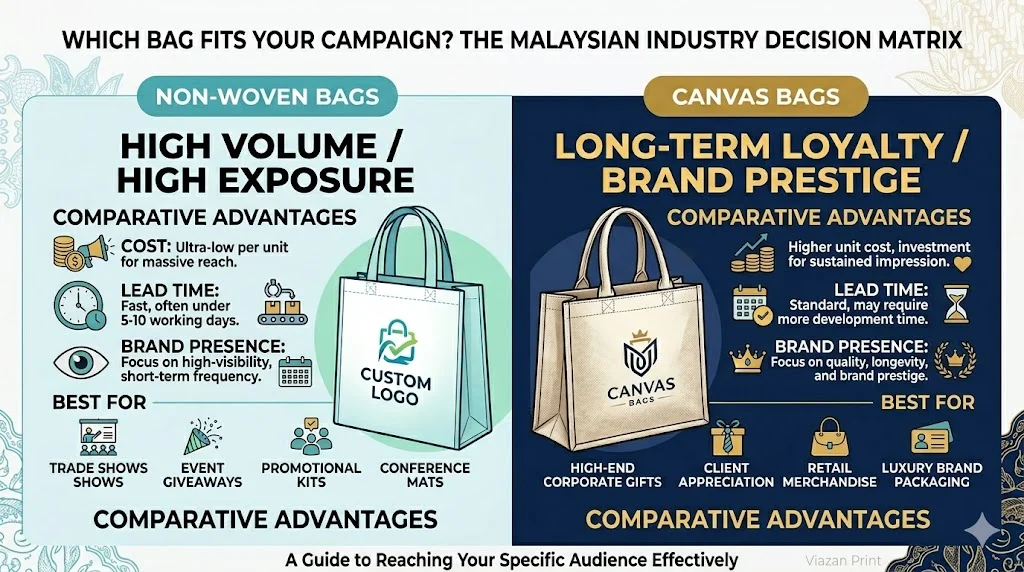
Some businesses order both: a high-volume non-woven bag for standard distribution and a smaller run of canvas bags for premium campaigns. Viazan Print manufactures both and can quote for a combined order.
Printing on Non-Woven vs Canvas: What Your Logo Will Actually Look Like
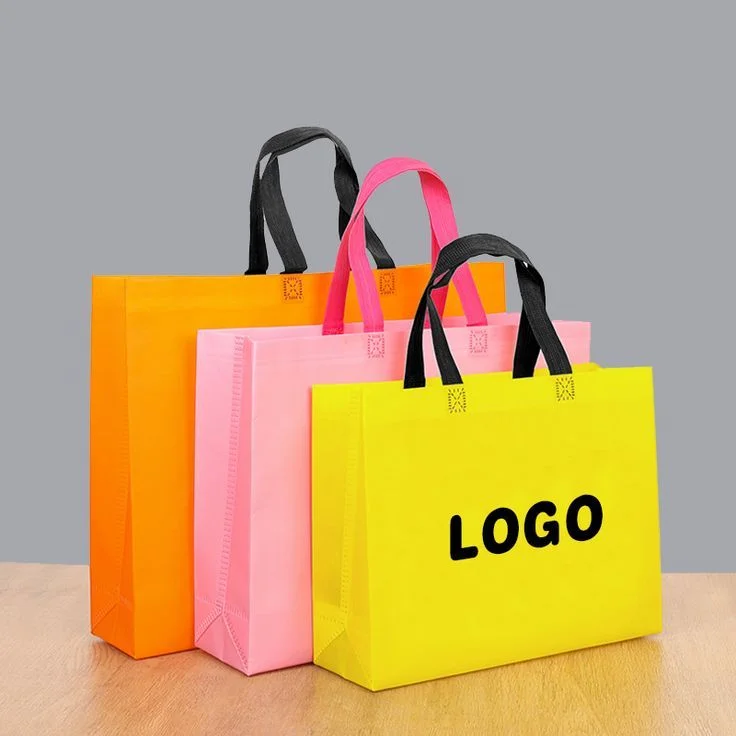
Both non-woven and canvas bags accept custom logo printing, but the materials respond differently to different printing methods. Choosing the wrong method for your material can lead to inconsistent results or unexpected costs at bulk quantities.
The table below matches the most common printing methods to both materials so you can brief your designer with the right specifications from the start. For a detailed breakdown of production timelines for custom printing, read our guide on custom bag printing.
Printing Method | Non-Woven | Canvas | Best For |
Screen printing (silk screen) | Not standard | ✓ Available | Bold, flat-colour logos on canvas |
Heat-press | ✓ Available | ✓ Available | Full-colour designs on both materials |
Laminated printing | ✓ Available | Not applicable | Vibrant, photographic-quality logos on non-woven |
Sublimation | Not standard | ✓ Available | Detailed, full-colour artwork on canvas |
DTF (direct-to-film) | Not standard | ✓ Available | Complex multi-colour artwork on canvas |
Screen printing works on both materials, but with different visual results. On non-woven, screen printing produces clean, crisp lines and solid colour fills because the smooth surface holds ink evenly.
On canvas, the same method produces a softer, more textured result because ink absorbs into the woven fibres differently. This suits artisanal or lifestyle-brand aesthetics but is less suited to precision multi-colour corporate logos.
Laminated non-woven bags are non-woven's premium printing option. The plastic or matte film over the fabric surface allows heat-press or gravure processes that produce photographic-quality, full-colour results with consistent colour accuracy across large batches.
Canvas cannot accept this lamination process, which means buyers comparing "standard non-woven printing" to canvas are not making the correct comparison; laminated non-woven is the higher-quality option.
Embroidery is canvas's premium printing option and is unavailable for non-woven. A thread stitched directly into woven cotton produces a raised, textured logo.
The standard for corporate gifts and festive gifting cycles, such as Hari Raya and Chinese New Year. Non-woven bags cannot be embroidered as the heat-bonded fibres do not hold thread stitching.
Not Sure Which Bag Is Right for Your Campaign? Talk to the Manufacturer Directly.
Viazan Print manufactures non-woven tote bags, canvas bags, paper bags, jute bags, nylon bags, and PP bags for Malaysian businesses ordering in bulk. With over 100 employees, in-house custom bag printing, and competitive bulk pricing.
We help FMCG companies, pharmacies, supermarkets, and universities source the right bag at the right volume, with fast lead times. To help us quote quickly, include your bag type, quantity, printing requirements, and required delivery date.
FAQ
How should canvas bags be stored and maintained in Malaysia's climate?
Store canvas bags in a dry, well-ventilated space. Avoid sealed containers or humid warehouses where mould can form on natural cotton fibres. Air-dry fully before packing if bags arrive damp. Machine wash in cold water and air-dry rather than tumble-dry to prevent shrinkage.
Is canvas or non-woven better for corporate gifts and annual dinner giveaways?
Canvas is the stronger choice for corporate gifts and annual dinner giveaways where perceived quality matters. Recipients are more likely to keep and reuse a well-branded canvas bag daily, extending brand exposure over months.
For large-scale events where budget is the primary constraint, non-woven is appropriate but for Hari Raya, Chinese New Year, or annual dinner gifting, canvas delivers a stronger brand recall.
Which bag type handles heavy items such as laptops, heavy groceries, or boxed products: which performs better?
Canvas bags (10–12 oz) handle laptops, boxed products, and heavy grocery loads better than non-woven. The woven structure distributes weight more evenly and holds shape under load. For standard retail and pharmacy use, high-GSM non-woven (90 GSM) handles the load reliably.
Can I print a full-colour logo on a canvas bag at bulk quantities?
Yes, canvas bags support full-colour logo printing via sublimation and DTF, with DTF well-suited to complex multi-colour artwork. The key difference from non-woven is aesthetic: full-colour printing on canvas produces a softer, more textured result that suits premium brand positioning.
For sharp, consistent full-colour logos at very high volumes, laminated non-woven delivers better colour accuracy across large batches.
Which bag type has a faster production lead time for bulk orders in Malaysia?
Non-woven bags have shorter production lead times as the manufacturing process is simpler and the material is produced domestically at scale. Canvas requires more production steps, particularly if sublimation or DTF printing is specified.
For both bag types, Viazan Print's standard lead times are 5 working days for orders below 10,000 pieces and 8 working days for orders between 10,000 and 20,000 pieces. For urgent orders, non-woven is the lower-risk choice; for planned campaigns with a confirmed launch date, canvas is entirely viable.